
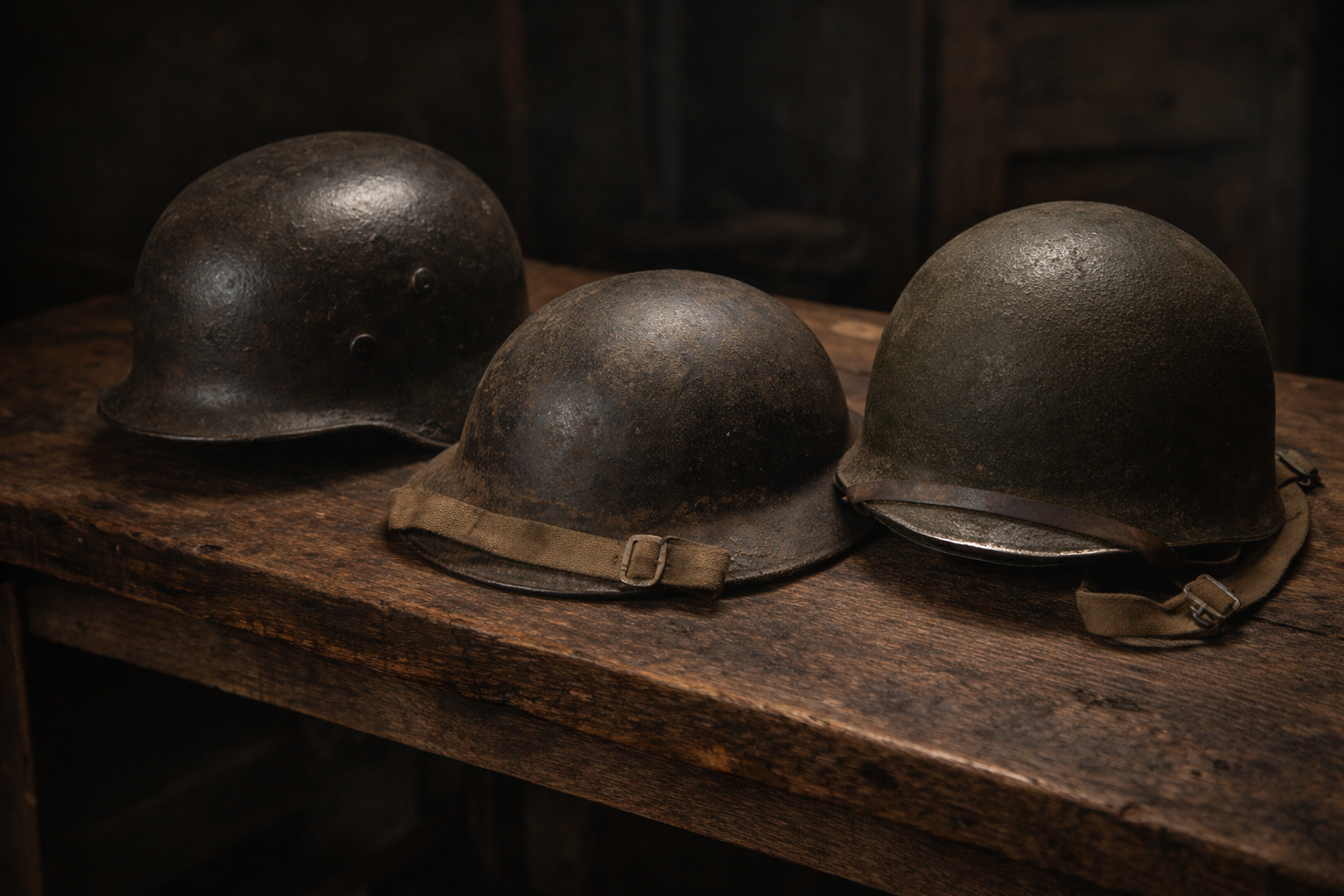
WWII Helmets: History, Design, and Collectability
World War II helmets are some of the most iconic and recognisable artefacts of the conflict. Worn by soldiers across every theatre of war, these helmets were not only vital for protection but also became lasting symbols of national identity, military design, and personal service. Today, original WWII helmets are highly sought after by collectors, historians, and families preserving wartime legacies.
From battle-scarred steel shells to carefully preserved examples, each helmet tells a story of the individual who wore it and the events they lived through.
The Purpose of Helmets in World War II
The primary role of WWII helmets was protection against shrapnel, debris, and indirect blast injuries. While not designed to stop direct rifle fire, helmets significantly reduced head injuries and saved countless lives.
Beyond protection, helmets also served practical and symbolic purposes:
- Identification of nationality and unit
- Carrying camouflage, netting, or insignia
- Boosting morale and uniformity among troops
As the war progressed, helmet designs evolved to balance protection, comfort, and mass production.
Iconic WWII Helmet Types
German Stahlhelm
The German Stahlhelm is one of the most recognisable helmets of the war. Its distinctive flared shape offered excellent shrapnel protection and became synonymous with German forces across Europe and North Africa. Original examples with period paint, decals, or combat wear are especially desirable today.
British Mk II Helmet
Often referred to as the “Brodie,” the British Mk II helmet was worn by British and Commonwealth forces. Its shallow bowl shape made it ideal for trench and artillery warfare, continuing a design lineage from the First World War.
U.S. M1 Helmet
The American M1 helmet is arguably the most iconic Allied helmet of WWII. Featuring a steel shell and removable liner, it was practical, adaptable, and remained in service long after the war. Original WWII-dated M1 helmets with correct liners and paint remain highly collectible.
What Makes WWII Helmets Valuable?
Several factors influence the value of WWII helmets:
- Originality: Untouched paint, liners, and chinstraps are crucial
- Condition: Honest wear is often preferred over restored examples
- Provenance: Named helmets or those with documented history carry premium value
- Rarity: Certain variants, decals, or battlefield modifications are scarce
Collectors value authenticity above all else — originality matters far more than cosmetic perfection.
Selling WWII Helmets with Warfront Collectibles
If you’re considering selling a WWII helmet, choosing a trusted specialist is essential. At Warfront Collectibles, we provide expert appraisals and a respectful, transparent service for those looking to sell WWII items.
We regularly acquire:
- German, British, and U.S. WWII helmets
- Combat-used and veteran-owned examples
- Helmets with liners, chinstraps, or unit markings
Whether you’re selling a single helmet or part of a wider collection, we ensure every piece is properly assessed and preserved.