
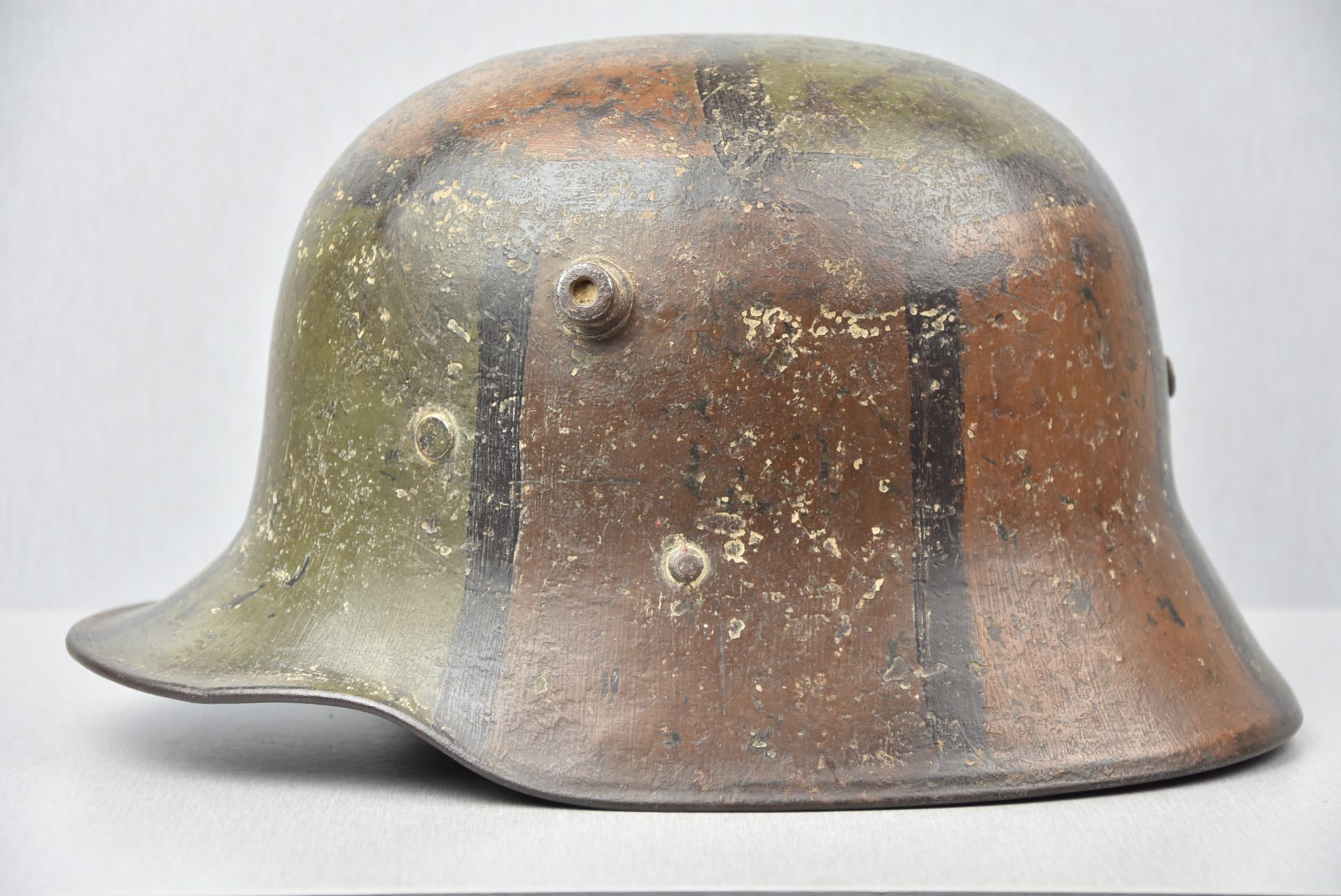
WW1 Helmets: How Steel Changed the Battlefield
WW1 helmets were introduced as a direct response to the devastating effects of artillery and shrapnel during trench warfare. Early in the First World War, soldiers on all sides went into battle wearing soft caps, offering little protection against falling debris and shell fragments.
By 1915–1916, steel helmets became standard issue across Europe — fundamentally changing battlefield survival rates.
The Most Iconic WW1 Helmets
British Brodie Helmet
Introduced in 1915, the Brodie helmet featured a wide brim designed to protect soldiers from shrapnel falling from above — a common hazard in trench warfare. Its simple pressed-steel design allowed for rapid mass production.
The Brodie would influence helmet design for decades, including early WWII British helmets.
German Pickelhaube
The leather Pickelhaube, instantly recognisable by its spike, was used at the outbreak of war. However, it offered minimal protection and was gradually replaced by steel designs.
Early war Pickelhauben with regimental plates remain highly collectible today.
German Stahlhelm M1916
The introduction of the Stahlhelm in 1916 marked one of the most advanced helmet designs of the war. With extended sides offering ear and neck protection, it provided far greater coverage than earlier models.
Original M1916 helmets with intact liners and original paint are particularly desirable to collectors.
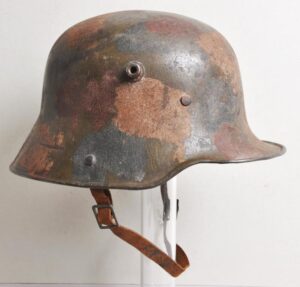
French Adrian Helmet
The French Adrian helmet, introduced in 1915, featured a distinctive comb along the top and was one of the first steel helmets adopted during the war.
Its lighter construction made it practical, and it became widely exported to allied forces.
Why WW1 Helmets Are Valuable Today
Original WW1 helmets are highly sought after because:
- They represent the first widespread use of steel protection in modern warfare
- Many surviving examples retain original paint and battlefield wear
- Named or regimentally marked helmets carry significant historical value
- They form the foundation of 20th-century military helmet evolution
Condition is crucial. Original liners, chinstraps, untouched paint, and provenance dramatically affect value.
What to Look for When Buying or Selling WW1 Helmets
When dealing with WW1 helmets, authenticity is key. Watch for:
- Correct construction methods
- Period rivets and fittings
- Natural ageing versus artificial distressing
- Correct liner materials
Reproductions exist, particularly for German models, so careful inspection is essential.
WW1 Helmets and Modern Collecting
Interest in First World War militaria continues to grow as the conflict passes further into history. Museums, historians, and private collectors all compete for quality examples.
Whether you are buying, selling, or simply researching, WW1 helmets remain one of the most visually striking and historically significant artefacts of the Great War.